The Micro, Small and Medium Enterprises Development Agency (MSMEDA) has awarded classification certificates to 25 innovative projects, out of a total of 61 companies that have been officially approved since the launch of the Egyptian Startup Charter.
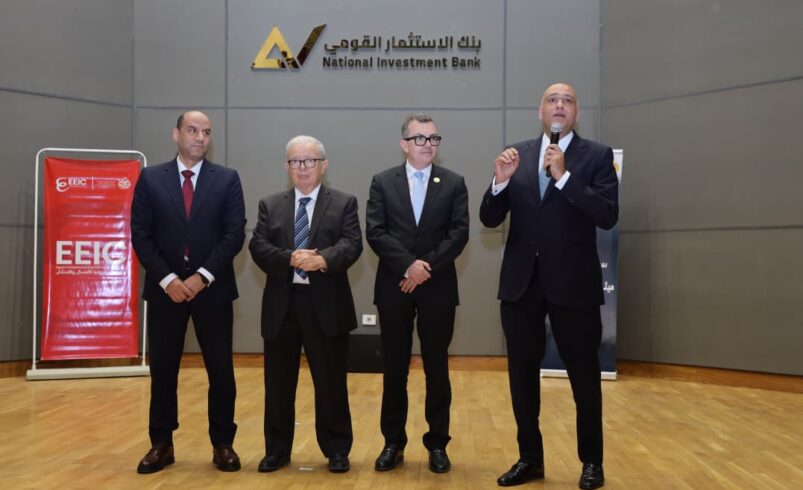
The certificates were delivered during a participatory event held under the patronage and in the presence of Dr. Hossam Eissa, Deputy Prime Minister for Economic Affairs and Head of the Ministerial Group for Entrepreneurship; Dr. Ahmed Rostom, Minister of Planning and Economic Development; Hassan Raddad, Minister of Labor; Basil Rahmy, CEO of MSMEDA; and Ashraf Nageh, Vice Chairman and Managing Director of the National Investment Bank, alongside several senior government officials and representatives of entrepreneurship support institutions.
This comes as part of the implementation of the Startup Charter launched by Dr. Mostafa Madbouly, Prime Minister and Chairman of MSMEDA, last February, which emphasized the implementation of directives by President Abdel Fattah El-Sisi to coordinate efforts across all state entities in support of entrepreneurs and owners of startups and innovative businesses.
Ministerial Entrepreneurship Committee
Basil Rahmy, CEO of MSMEDA, reaffirmed during his speech the agency’s commitment to providing various forms of support to entrepreneurs and innovative businesses.
He highlighted the role of the Ministerial Committee for Entrepreneurship in coordinating efforts across ministries and responding quickly to entrepreneurs’ needs to help them sustain and scale their businesses.
Rahmy noted that MSMEDA continues to provide technical and financial services to attract more entrepreneurs to either start new businesses or expand existing ones.
He also stated that, in cooperation with experts from the World Bank Group, the agency launched the first investment program in investment funds (Fund of Funds), which invest in Egyptian startups, with funding of USD 50 million.
He added that, under the Charter, the agency enables startups to obtain classification certificates, provides technical training for employees to enhance their skills according to the latest standards, supports incubators and accelerators, and facilitates participation in exhibitions to help startups market their products.
Rahmy further emphasized the integration of roles among members of the ministerial group in implementing the Startup Charter as a pioneering initiative in Egypt, reflecting the needs of a promising youth-driven sector and enabling access to incentives provided under investment-supporting laws, including MSME Law No. 152 of 2020.
The event included an engaging dialogue with entrepreneurs, who presented their upcoming needs and expressed appreciation to the committee and MSMEDA for granting classification certificates. Among the startups recognized were “Fuel In”, “Flint”, “Olive”, “Sprints”, and “Bokra”, among others.
Startup Charter
The Startup Charter targets recently established companies characterized by rapid growth, flexibility, and innovation, aiming to introduce or develop innovative products, services, or business models in the market. The Startup Classification Committee includes representatives from the Ministerial Entrepreneurship Group, venture capital funds, angel investors, the entrepreneurship community, and MSMEDA.
The committee reviews applications submitted by Egyptian startups seeking classification certificates. The Charter provides two application tracks: a fast-track process within five days, and a standard track within two weeks. Companies can apply via www.startup.gov.eg.
Applicants may choose either the regular track, open to all applicants and evaluated through standard committee review, or the fast-track, which is reserved for startups nominated by accredited investment funds. In case of rejection, companies have the right to appeal within 15 days for reconsideration.